
Biography
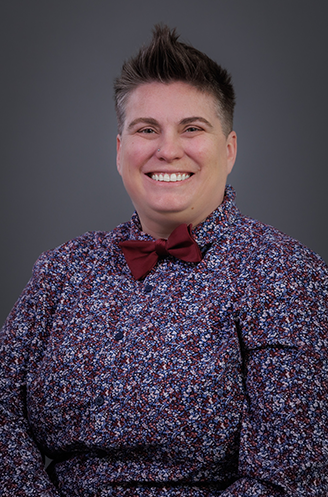
Kathy Dolan-Cox, MSN, RN, CNE, holds a Lecturer II position at the University of New Mexico (UNM) College of Nursing. Prior to joining UNM in January 2021, she was an adjunct instructor at Central New Mexico Community College. Kathy has taught in nursing education since 2015 and holds a national certification as a Certified Nurse Educator. Kathy worked as a registered nurse at UNM Hospital in Adult Medical-Surgical Sub Acute Care, Neurosurgical Intensive Care, and Outpatient Internal/Family Medicine.
Kathy received a Bachelor of Science in Nursing from The University of Utah in 2008 and a Master of Science in Nursing from UNM in 2011. Kathy's research and scholarly interests include diversity, equity, and inclusion in healthcare and community and preventive healthcare. Kathy received the Daisy Award in 2012 and the CNO award Nurse as Scientist in 2011.
Personal Statement
I believe that every student has the ability to succeed in nursing school, and my role as an educator is to guide and mentor them through this journey. I do this by fostering a collaborative and individualized approach to teaching. I aim to empower students to achieve their full potential. I prioritize creating a safe, inclusive environment where students feel psychologically, emotionally, and physically secure. This encourages open dialogue and allows students to share their thoughts and questions without fearing judgement. Clear communication of professional expectations and course requirements establishes this foundation, and I revisit ground rules throughout the semester to address challenging or sensitive topics.
I strive to create a learning environment that celebrates differences and addresses the factors that can attribute to bias. I foster a bias-free space by learning students’ names and pronouns. I ensure that course materials support a bias free environment. Together, we explore historical and current structural racism, medical stereotypes and biases, negative social determinants of health, and vulnerable populations. This collaborative approach empowers students to make meaningful changes that improve patient satisfaction and health outcomes.
My teaching style is grounded by the adult learning theory. I use the students’ motivation and past experiences to facilitate learning new concepts. I design interactive, engaging learning activities to reinforce learning. By incorporating the principles of spacing and interleaving, I ensure that students revisit and connect concepts throughout the semester for better retention. I hold students taking my courses at a high standard. I am transparent about my expectations as well as what tools to utilize to meet course requirements. I am successful as an educator when everyone in the class is participating, students are asking questions, each student finds success for their needs, student evaluations that share beneficial strategies and constructive suggestions to improve the course, and NCLEX pass rates that reflect effective learning.
Teaching inspires me because of its transformative impact on individuals, families, and communities. I thrive on developing organized course materials, creating interactive activities, and crafting assessments that align with course outcomes. Teaching is more than what is done during class time. I actively monitor students’ progress, identify challenges early, and provide individual support to ensure their success.
Learning is a lifelong adventure for students as well as instructors. I have developed as an educator each semester from my students and the experiences that occurred. I continuously seek opportunities to grow as an educator. My professional development includes earning a Certified Nursing Educator Certificate, attending workshops on best practices, and presenting on implicit bias. Programs such as the UNM Health Sciences Center Certificate in Clinical Ethics and the AACN Diversity Leadership Institute have deepened my understanding of inclusive teaching and leadership. The most important aspect that has developed my teaching abilities is dedicating time to utilizing new activities and tweaking them after implementing them.
As a nursing instructor, my goal is to create a safe, organized, and interactive learning environment that fosters student success and prepares them for meaningful careers in nursing. Education is a lifelong journey, and I am committed to evolving alongside my students to make a lasting impact on the profession.
Areas of Specialty
Acute Care | Health Equity | Nurse Education
Education
MSN, University of New Mexico, 2011 (Community Nursing)
BSN, University of Utah, 2008 (Nursing)
BS, Weber State University, 2004 (Criminal Justice)
Certifications
RN: Registered Nurse
CNE: Certified Nurse Educator
Achievements & Awards
Sigma Theta Tau International Honors Society Member
Daisy Award 2012
CNO award nurse as scientist 2011
Languages
- English
Research and Scholarship
Conducting research and sharing findings are essential for improving patient outcomes, enhancing nursing education, and advancing the nursing profession. As a Lecturer II at UNM, I am allocated three credit hours annually for scholarship and service.
Throughout my time at UNM, I have engaged in several individual scholarship projects, focusing on diversity, equity, and inclusion. The impacts of working on the following scholarship projects have contributed to enhancing student success, student satisfaction, and strengthening faculty relationships. Here is a list of the scholarship activities I have participated in:
1. Poster and podium presentation at AACN Diversity Leadership Institute at the Access, Connection, Engagement symposium pre-conference titled: "Utilizing Connection and Collaboration to Enhance Student Success (S.U.C.C.E.S.S.)"
2. Oral presentation for the Rio Rancho High School Mentorship titled "Introduction to Electrocardiograms (EKG/ECG)"
3. Hot Topic Small Group Presentation at the UNM's Health Science Center (HSC) Education Day titled "What is Not Said in the Classroom: Implicit Bias in Teaching"
4. Podium presentation at the NM Emergency Nurses Association Conference titled "What We Don't Say: Implicit Bias in Healthcare"
5. Oral presentation for the Clinical Ethics Course 2022 - 2023 titled "Reproductive Health - Sterilization".
6. Podium presentation at the Spring 2023 Clinical Educator Workshop titled "Implicit Bias in Clinical"
Description of scholarly work:
1. June 3/4, 2025 Poster and podium presentation at AACN Diversity Leadership Institute at the Access, Connection, Engagement symposium pre-conference titled: "Utilizing Connection and Collaboration to Enhance Student Success (S.U.C.C.E.S.S.)"I was accepted to the AACN Diversity Leadership Institute 2025. I attended monthly 2-day workshops (8 hours each month) for 4 months. I attended monthly fireside mentoring sessions monthly (2 hours each month) for 4 months. Each meeting we reviewed different concepts of leadership in academia and making nursing school/nursing a possible for all. I networked with professionals across the country. We completed activities and supported each other in completing a capstone project.
I completed my capstone project on a peer-mentoring program for the RR campus. I decided on this topic because the Rio Rancho campus is small and does not have many resources. Students have mentioned wishing there was more opportunities for connecting with each other. I made a poster and ppt presentation and presented them at the AACN DLI graduation in Indianapolis.
Learning Objectives:
-Create and implement a peer mentoring program at the University of New Mexico College of Nursing at the Rio Rancho campus by spring 2026.
-Improve nursing student participants’ self-confidence, belonging, leadership skills, and mental health.2. March 7, 2024 Oral presentation for the Rio Rancho High School Mentorship titled "Introduction to Electrocardiograms (EKG/ECG)
I was asked to provide a presentation for the Rio Rancho High School Mentorship. This program was created by Dr. Ludi. It is aimed at increasing enrollment in nursing school as well as improving nursing student's leadership skills. Local high school students are paired with a level 3, 4, or 5 nursing student. The pair meet weekly to participate in activities to assist the high school students to understand what nursing school is like, how to apply, and how to improve their application. The nursing school mentors assist in running activities and communicate with their mentee weekly. I created a ppt on EKG basics and did a lecture for high school students and nursing students in the mentorship program. I created and completed three active learning activities during this time. We did a heart dance, EKG lead placement game, and an escape room. For the escape room, the high school students and the nursing students worked together to complete several puzzles on the material taught during the mini lecture to figure out the passcode.
Learning Objectives:
-Review what EKGs are.
-Identify the indications for EKGs.
-Determine the nurse’s role for placement and maintenance of EKGs.
-Review the electrical heart system.
-Identify the different (basic) components of an electrocardiogram reading.
-Interpret 5 EKG readings.
3. February 9, 2024 Hot Topic Small Group Presentation at the UNM HSC Education Day titled "What is Not Said in the Classroom: Implicit Bias in Teaching"My abstract was accepted to facilitate a hot topic table at the UNM HSC Education Day. I choose the topic of implicit bias in teaching because I found that many materials and practices used in courses that I inherited had many implicit bias aspects in the PowerPoints, reading materials, and activities. I wanted to share with others how implicit bias affects learners and ways to eliminate it in the classroom to improve student success and satisfaction.
Abstract:
Everybody has implicit bias. It is unconscious and effects student learning and outcomes. Learning about implicit bias and how to eliminate it in education will improve student outcomes, satisfaction, and potentially patient outcomes. The hot topic will include discussion of what implicit bias is, examples of it, impacts of it, and actions to take to address it.4. July 22 2023 Podium presentation at the NM Emergency Nurses Association Conference titled "What We Don't Say: Implicit Bias in Healthcare"
My abstract was accepted to present a podium presentation at the New Mexico Emergency Nurses Association Conference held in Albuquerque. I choose this topic because when I was an intensive care nurse, I remember the SBAR reports and comments about patients that continued and promoted implicit bias communication that affected patient outcomes. I had been teaching about implicit bias in my nursing courses, but I wanted to reach a bigger audience so that patient outcomes could be furthered improved.
Learning Objectives:
-Define implicit bias and discuss how it exists in healthcare.
-Identify the impact implicit bias has on patient outcomes.
-Review actions to take to address implicit bias.
-Practice addressing implicit bias.
5. June 2023 Oral presentation for the Clinical Ethics Course 2022 - 2023 titled "Reproductive Health - Sterilization".
I was accepted to participate in the Clinical Ethics Course 2022 - 2023. We met via Zoom twice a month for 9 months to discuss ethics in healthcare. I completed a project at the at the end of the course. My project was on reproductive health - sterilization. I choose this topic because of the lack of discussion of the historical and current practices of mandatory sterilization and denial of consented sterilization. I presented this to the participates of the course. I also presented it as a guest lecturer in a online module for the N429 Healthcare Ethics for Nurses (summer 2023).
Abstract:
Reproductive health, especially an in depth understanding of the issues related to sterilization has been a challenge within our healthcare system. For this learning activity, there are videos, a podcast, and a reading. If you choose this topic, please post a discussion post.
Learning Objectives
-Link historical practices, laws, and factors to involuntary sterilizations.
-Recognize populations at risk for involuntary sterilizations and factors for denial of voluntary sterilizations.
-Discuss how autonomy and beneficence can be applied for decision making for sterilizations.
-Identify the ethical role of the nurse in reproductive health care.
6. January 20 2023 Podium presentation at the Spring 2023 Clinical Educator Workshop titled "Implicit Bias in Clinical"
I was asked to provide a presentation for UNMH unit-based educators on the topic of implicit bias. I provided an oral presentation on implicit bias in clinical and had the participates complete an active learning activity during the presentation.
Learning Objectives:
-Explain implicit bias.
-Identify implicit bias.
-Discuss the impact of implicit bias.
-Review actions to address implicit bias.
-Practice addressing implicit bias.