

The Distribution of Effort (DoE) is an initiative at The University of New Mexico Health Sciences Center (HSC) designed to better balance the institution’s core missions: providing compassionate clinical care to New Mexicans, training the state’s future healthcare workforce and, advancing discovery through research.
New Mexico faces a significant shortage of healthcare providers, and the demand for increased access to physicians and other health professionals continues to grow. In response, UNM is taking a thoughtful, data-informed look at how faculty allocate their time, particularly the time spent delivering patient care, to expand access and promote greater health equity across the state.
At the same time, UNM recognizes that its clinicians play a vital role in education and research. The DoE initiative ensures that faculty continue to dedicate meaningful time to teaching students and training the next generation of providers, while also supporting scholarly work.
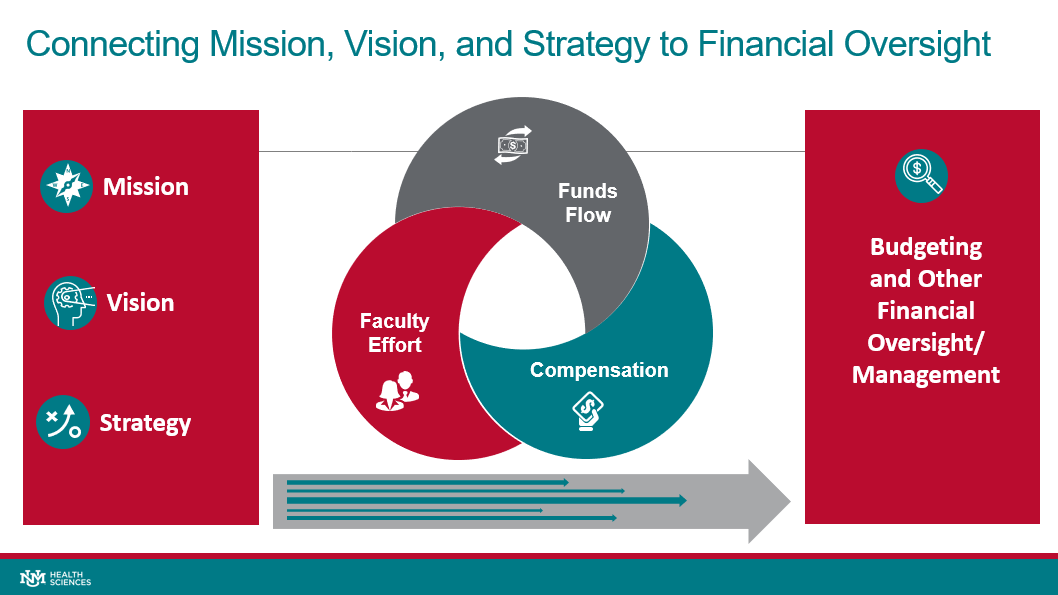
UNM School of Medicine clinical faculty have recently catalogued all teaching responsibilities, ensuring that teaching roles are defined. That has informed the DoE on how to create a balance between time spent on academic affairs and patient care.
Nationally, academic medical centers allocate an average of 73% of faculty time to clinical care, with the remaining 27% devoted to academic and administrative responsibilities. At the UNM School of Medicine, the current clinical-to-academic ratio is 61/39. The goal of the DoE initiative is to make a modest adjustment to a 70/30 average institutional target, not an individual mandate. Doing so would bring UNM more in line with peer institutions while expanding patient access across New Mexico.

The DoE is a key part of UNM’s broader commitment to ensuring all New Mexicans have timely access to high-quality healthcare, while supporting the University’s Healthcare Workforce Expansion Initiative. This effort aligns with major investments in clinical infrastructure, including the opening of the UNM Hospital Critical Care Tower, the expansion of the UNM Children’s Psychiatric Center, and the development of a new UNM Truman Health Services facility.
As these new and modernized spaces come online, UNM is focused on ensuring that the right number of clinicians are practicing in the right settings to meet the state’s growing healthcare needs. At the same time, these clinical environments are essential for educating students and trainees, providing them with the hands-on experience they need to prepare for independent practice.
As a public institution, UNM also has a responsibility to steward public resources wisely. With reduced federal healthcare reimbursements, rising insurance costs, and an increase in the cost of medical supplies there is an urgent need to strengthen UNM Health Sciences’ financial sustainability. The DoE initiative helps position UNM Health Sciences to meet these challenges while continuing to serve patients and communities across the state.
Additionally, the DoE promotes greater equity and transparency for faculty. By aligning compensation with national benchmarks, the initiative ensures that faculty compensation is consistent with peers at UNM and comparable institutions nationwide. UNM’s data-driven approach also allows the health system to scale and grow, determined by the needs of New Mexico’s communities.
Historical reliance on individually negotiated compensation and inconsistent methods of accounting for faculty time has resulted in a system that is not transparent, equitable, predictable, or scalable. Establishing a standardized approach is essential to support the growth of clinical services, Graduate Medical Education, and Undergraduate Medical Education.
While the DoE effort began with clinical faculty in the UNM School of Medicine, similar work will be implemented across other HSC academic units, including the Colleges of Pharmacy, Nursing, and Population Health.
Ultimately, the DoE allows UNM Health Sciences to fulfill its promise to New Mexico to “Deliver More.”
Leadership across the HSC have aligned to ensure integration and collaboration, led by the Clinical Leadership Group (CLG) and the Compensation Oversight, Modeling, Planning and Strategic Support (COMPASS) Committee.
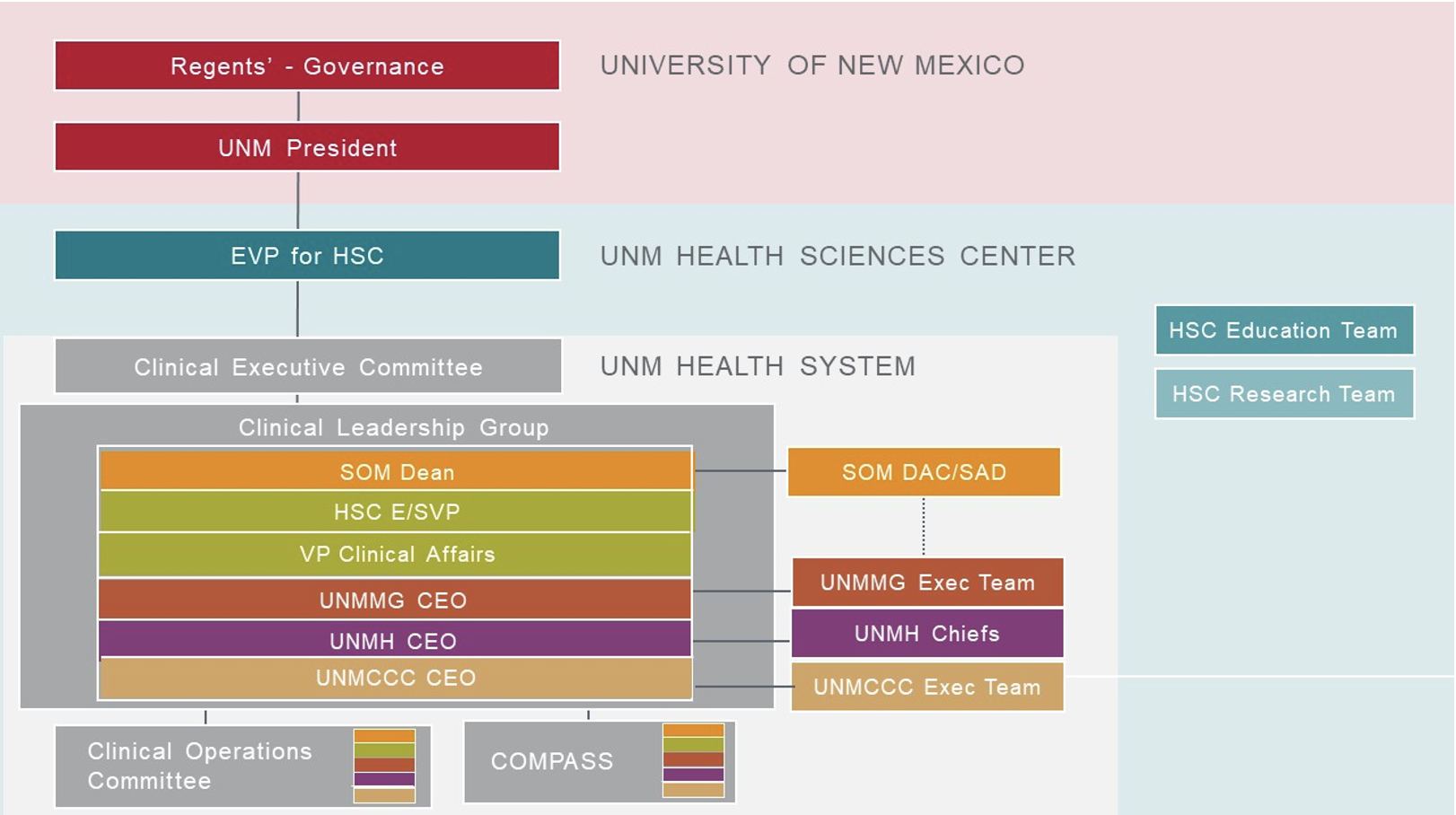
CLG is comprised of leadership from the HSC, UNM School of Medicine, and the UNM Health System working together to address issues affecting our clinical enterprise. COMPASS has the same stakeholder groups and includes three School of Medicine department chairs. COMPASS provides governance as work aligns with established benchmarked standards. CLG serve as a decision-making group, and final authority resides with the HSC Executive Vice President.
Success is reflected in a model that brings greater clarity and discipline to how educational effort is defined, measured, and supported. By establishing defined roles, improving visibility, and anchoring expectations in benchmarks, it ensures not only equity and transparency, but also a more rigorous and consistent approach across departments. Above all else, UNM must position itself to meet the needs of our communities- providing care to patients, advancing discovery, and educating New Mexico’s healthcare workforce.
