

CHEK-D Director, Dr. Larissa Myaskovsky, joined CHEK-D senior statistician, Naheed Shahbaz, and long-time CHEK-D collaborator, Dr. Yue-Harn Ng, at the annual meeting of the American Transplant Congress in Boston, MA. They presented two posters, “Kidney transplant outcomes among all patients transplanted in New Mexico (1996-2022)” and “Association of neighborhood-based socioeconomic status with kidney transplant waitlisting and transplantation.” Also, Dr. Myaskovsky was part of the winning team that received the American Journal of Transplantation Outstanding Article Award at the American Transplant Congress (2026). It was a very successful summer for CHEK-D!

CHEK-D Director, Dr. Larissa Myaskovsky, received the Distinguished Scientist Award at the annual meeting of the Society of Behavioral Medicine in Chicago, IL. The award is presented annually for scholarly distinction through a series of distinguished empirical contributions or to the development of new theories or methods.

CHEK-D Biostatistician, Yuridia Leyva, and Sr Statistician, Naheed Shahbaz, presented two separate talks at the American Statistical Association Chapter 2026 event. They were the only presentations that discussed health-related data in the community.

An increasing body of evidence suggests that the kidney transplant evaluation process can be burdensome to patients and caregivers, resource-intensive for transplant programs and the healthcare system, and limit transplant access. A strategy of systematically reducing the number or intensity of testing procedures—or de-escalation—that is supported by available medical evidence and clinical consensus holds promise as a potential avenue to improve transplant access. In this paper, the authors outlined the rationale for de-escalation of portions of the pretransplant medical evaluation for kidney transplantation, applied an implementation science framework to systematically examine the barriers and facilitators for de-escalation, and laid out a blueprint for how de-escalation may be achieved in an efficacious, safe, and sustainable manner.
Please access the paper here.
CHEK-D Director, Dr. Larissa Myaskovsky, was part of a panel of experts organized by the American Society of Transplantation (AST) to develop and carry out a survey assessing transplant recipients’ perceptions of unmet immunosuppressant needs. The survey was conducted because patients’ perspectives are rarely captured in drug development, and have never been captured for transplant medications. The survey included topics such as medication side-effects, treatment burden, health-related quality of life, adherence, self-efficacy, costs and trust. The survey was launched at the American Transplant Congress on June 4, 2023, and remained open until September 30, 2024. A total of 10,091 responses were included (9,543 adults, 548 pediatrics) representing 232 transplant centers in the United States and Canada. Respondents were well represented across various demographic and clinical characteristics. Key findings showed that nearly all participants (92%) reported at least 1 side effect (with an average of 3). Most side-effects occurred ‘often’ or ‘always.’ 54% of side-effects rated as having a ‘moderate’ or ‘great deal’ of impact on daily life, and the side effects rated with greatest daily burden included cancer, pain/neuropathy, kidney disease, memory/brain fog, diabetes, and hypertension. Approximately 25% skipped meds due to side effects and 40% missed refills due to cost. The team found that immunosuppressants cause serious daily burden in transplant patients’ lives. They concluded that new drugs are needed with better safety, tolerability, burden outcomes, and that side effects and treatment burden must be a part of new drug approvals in transplantation with differentiating labeling.
Please access the paper here.
“Kidney Transplant Fast Track and Likelihood of Waitlisting and Transplant” (Myaskovsky L, Leyva Y, et al.)
This nonrandomized clinical trial investigates the association of a streamlined evaluation approach for patients undergoing kidney transplant with waitlisting and transplant likelihood. In this study of 1118 patients with end-stage kidney disease (ESKD) who underwent the Kidney Transplant Fast Track (KTFT) Intervention, and a historical control group of 1152 patients with ESKD undergoing evaluation for kidney transplant, the KTFT group had a higher likelihood of waitlisting and transplant than the historical control group. Unlike the historical control group, the KTFT group had no significant differences in kidney transplant by race or ethnicity. Findings suggest that KTFT was associated with reduced disparities by race and ethnicity and point the way toward the implementation of more equitable transplant screening mechanisms.
Please access the paper here.
To read the UNM HSC News Highlight, please click here.

The University of New Mexico’s Center for Healthcare Evaluation in Kidney Disease (CHEK-D) is pleased to announce our latest publication, “Kidney Patients’ Healthcare Perceptions and a Concierge-Based Transplant Evaluation Approach” in JAMA Network Open. This paper examined whether Black and White participants experienced improvements in perceptions of healthcare after undergoing a streamlined, concierge-based approach to kidney transplant evaluation.
Please access the paper here.
AcademyHealth improves health and health care for all by advancing evidence to inform policy and practice. Health services research, put simply, is the science of study that determines what works, for whom, at what cost, and under what circumstances. It studies how our health system works, how to support patients and providers in choosing the right care, and how to improve health through care delivery.
This award was presented during the Annual Meeting on June 29, 2024.
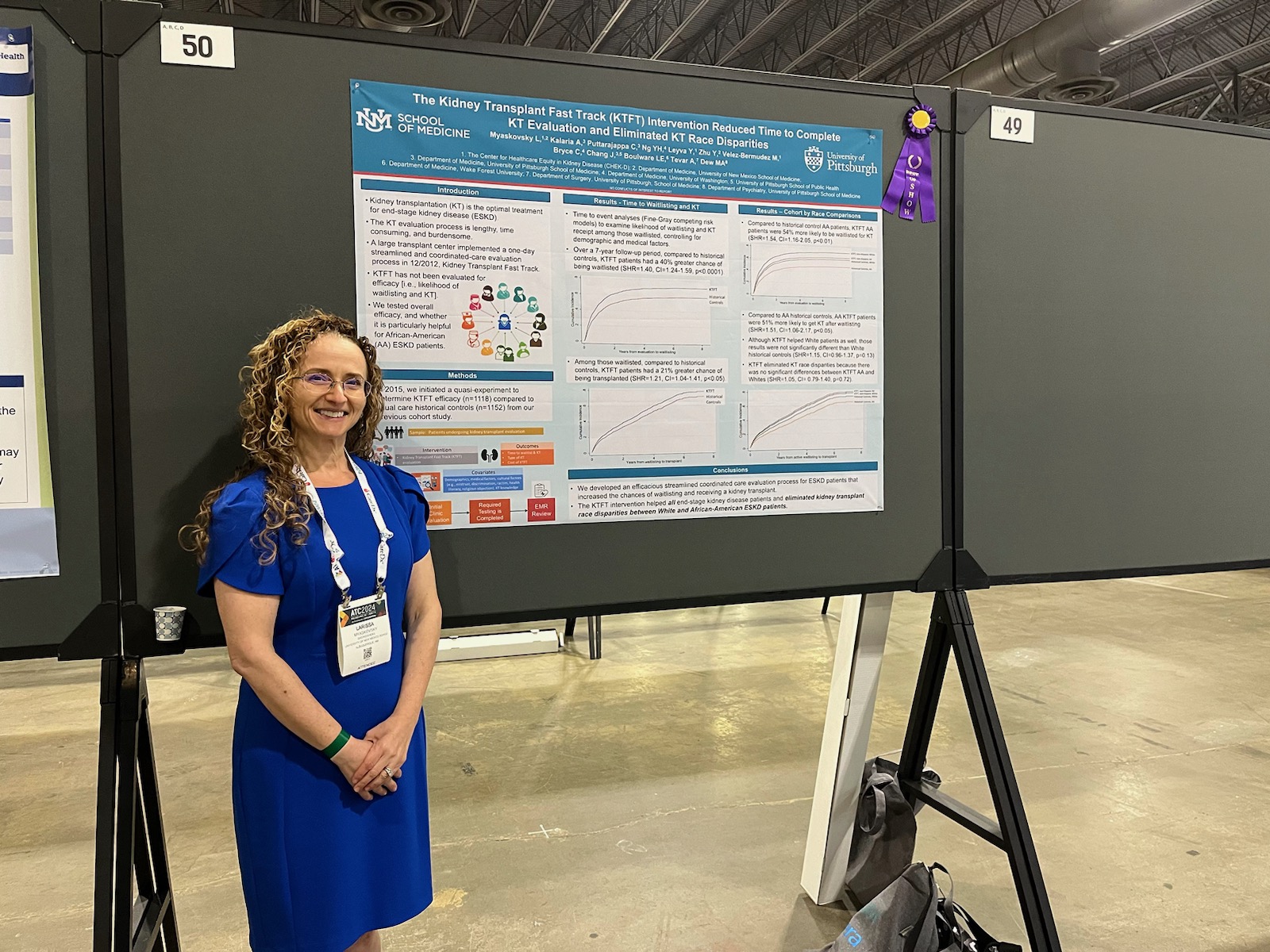
At this year’s annual meeting of the American Transplant Congress, Drs. Larissa Myaskovsky and Miriam Vélez-Bermúdez, received the Best in Show award for their poster entitled, “The Kidney Transplant Fast Track (KTFT) Intervention Reduced Time to Complete KT Evaluation and Eliminated KT Race Disparities.”
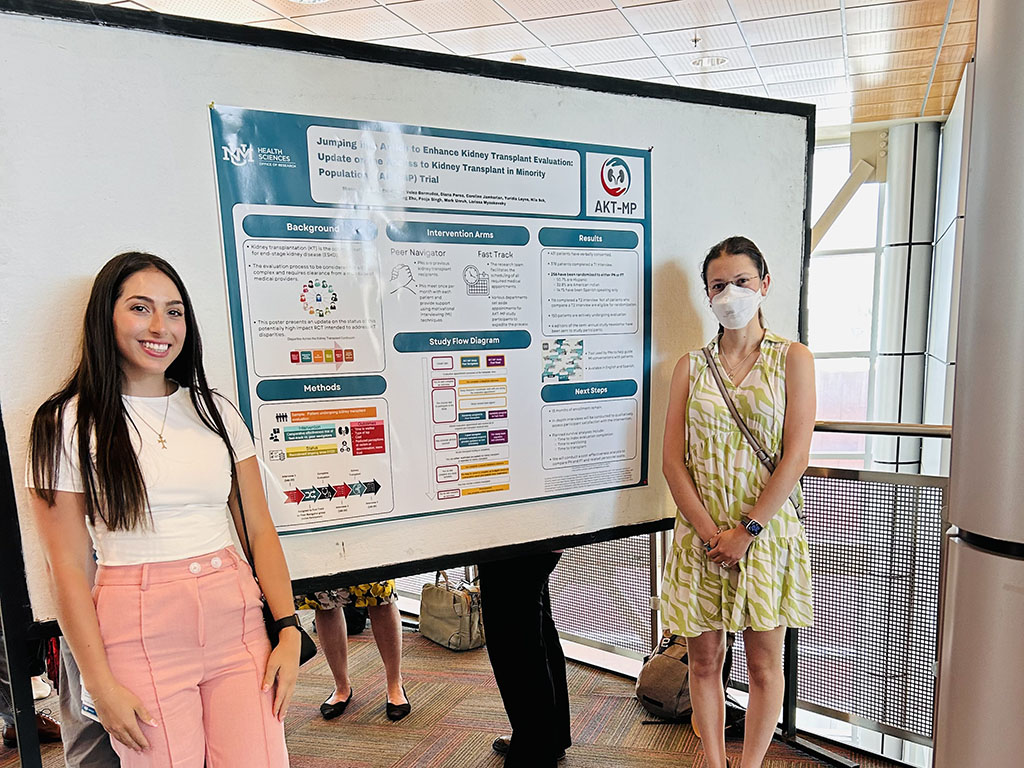
Scholar's Day poster presentations are a highlight of the academic year and a testament to the impressive scholarship happening across the institution. CHEK-D presented posters on New Mexico COVID data, the AKT-MP and IMPACT research projects.
CHEK-D Director, Dr. Larissa Myaskovsky, was recently accepted as a Fellow of the Society for the Psychological Study of Social Issues (SPSSI). SPSSI Fellow status formally recognizes outstanding contributions to psychology and to the study of social issues. To learn more about SPSSI, please go to: https://www.spssi.org/.
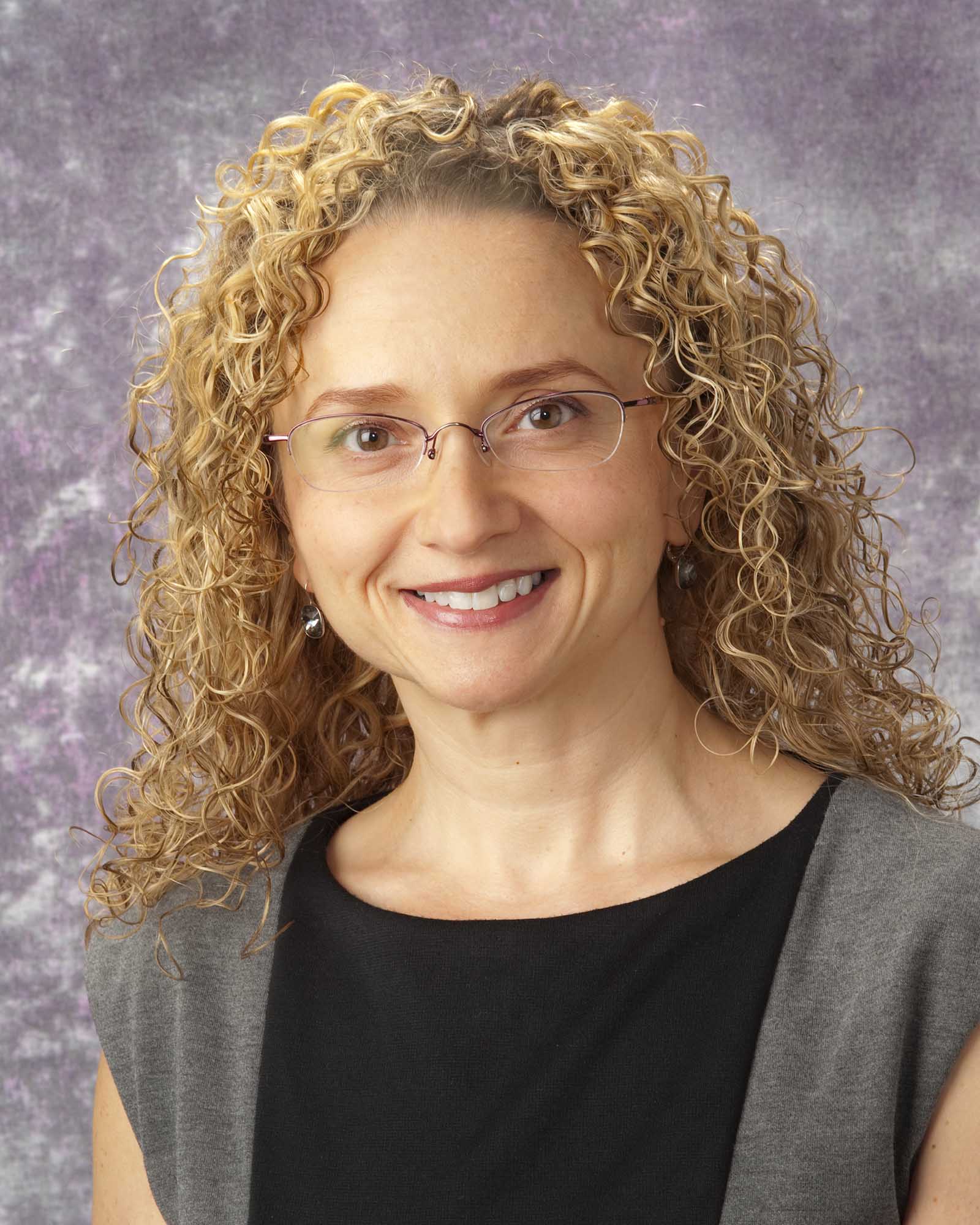
Dr. Larissa Myaskovsky, CHEK-D Director, was given a Excellence in Research Award for Population Science during the Health Sciences Center's 14th Annual award ceremony, hosted by the HSC Office of Research.
Click on this link to watch the presentation.

Dr. Miriam Vélez-Bermúdez was selected to attend the Rising Stars in Health Sciences Symposium, July 24 – 26, 2023, hosted by the Indiana University School of Public Health, Bloomington. She will be fully funded by Indiana University to attend the meeting. Dr. Vélez-Bermúdez is a post-doctoral fellow at the Center for Healthcare Evaluation in Kidney Disease (https://hsc.unm.edu/research/centers-programs/chek-d/), and is funded by a T32 grant from the Cardiovascular Research Training Program (https://hsc.unm.edu/medicine/education/reo/training-programs/cardiovascular.html) at UNM Health Sciences.
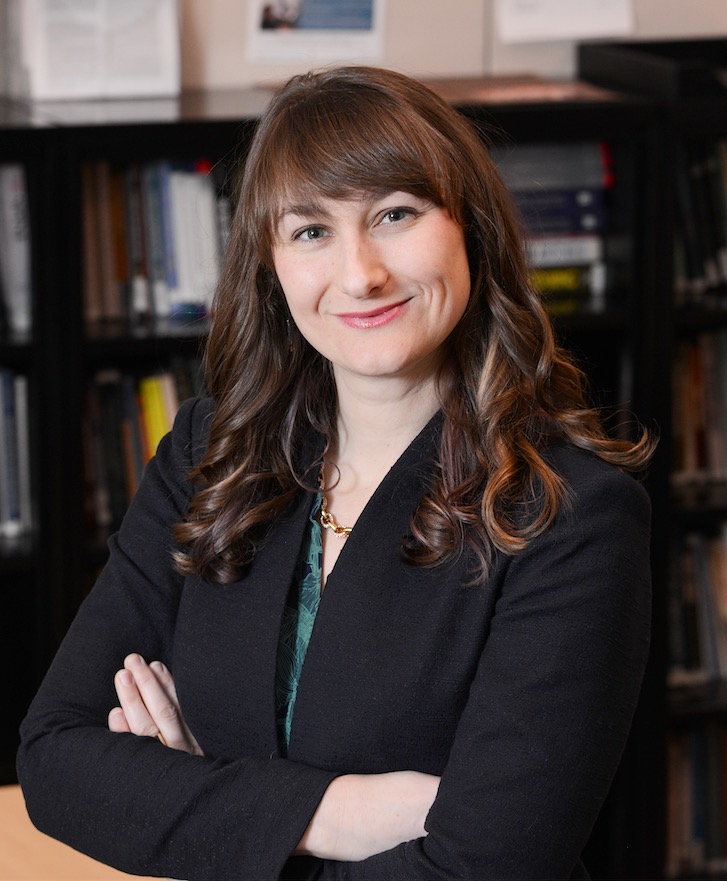
Congratulations to Dr. Margaret Greenwood-Ericksen, Assistant Professor of Emergency Medicine (secondary appointment in the Department of Psychiatry and Behavioral Sciences), on receiving a K08 Career Development award from the Academy for Healthcare Research and Quality (AHRQ)!
Dr. Greenwood-Ericksen’s award “Improving rural mental health equity through Medicaid policy evaluation,” is a federally-funded five-year mentored research development award to examine the impact of Medicaid policy on behavioral healthcare outcomes.
She is the first physician at UNM to be awarded an external Career Development Award. Her mentorship team includes Drs. Larissa Myaskovsky, Douglas Ziedonis, Cameron Crandall, and Caroline Bonham.
Dr. Greenwood-Ericksen completed medical school at the University of Arizona, residency training at Harvard, and received an MSc degree from the National Clinician Scholars Program at the University of Michigan. She is an emergency physician and health services researcher whose career is focused on transforming the structure of rural healthcare delivery to improve outcomes for vulnerable communities. Her research explores rural emergency care delivery models and associated outcomes to identify disparities and inform policy-level interventions. She has a particular interest in Medicaid policy and behavioral healthcare delivery to rural communities. She has published on rural emergency care quality and outcomes, health related- social needs, and care delivery models; and serves on national committees dedicated to rural quality and delivery.
Dr. Greenwood-Ericksen’s long-term career goals are to become an independent physician- scientist working to transform Medicaid policy in rural mental health outcomes, and a national expert on rural mental healthcare delivery within emergency medicine.
Click here to read the abstract.
The University of New Mexico’s Center for Healthcare Evaluation in Kidney Disease (CHEK-D) is pleased to announce our latest publication, “Predicting Kidney Transplant Evaluation Non-attendance” in the Journal of Clinical Psychology in Medical Settings. This paper examined the medical and socio-cultural factors that predict non-attendance at patients’ initial evaluation clinic appointment for kidney transplantation, an important first-step on the long road to getting a kidney transplant.
Please access the paper here.
The University of New Mexico’s Center for Healthcare Evaluation in Kidney Disease (CHEK-D) is pleased to announce our latest publication, “Protocol for the AKT-MP Trial: Access to Kidney Transplantation in Minority Populations” in Contemporary Clinical Trial Communications. This trial compares two patient-centered methods to facilitate kidney transplant evaluation: kidney transplant fast track (KTFT), a streamlined KT evaluation process; and peer navigators (PN), a peer-assisted evaluation program that incorporates motivational interviewing. This pragmatic randomized trial will use a comparative effectiveness approach to assess whether KTFT or PN can help patients overcome barriers to kidney transplant listing.
Please access the paper here.
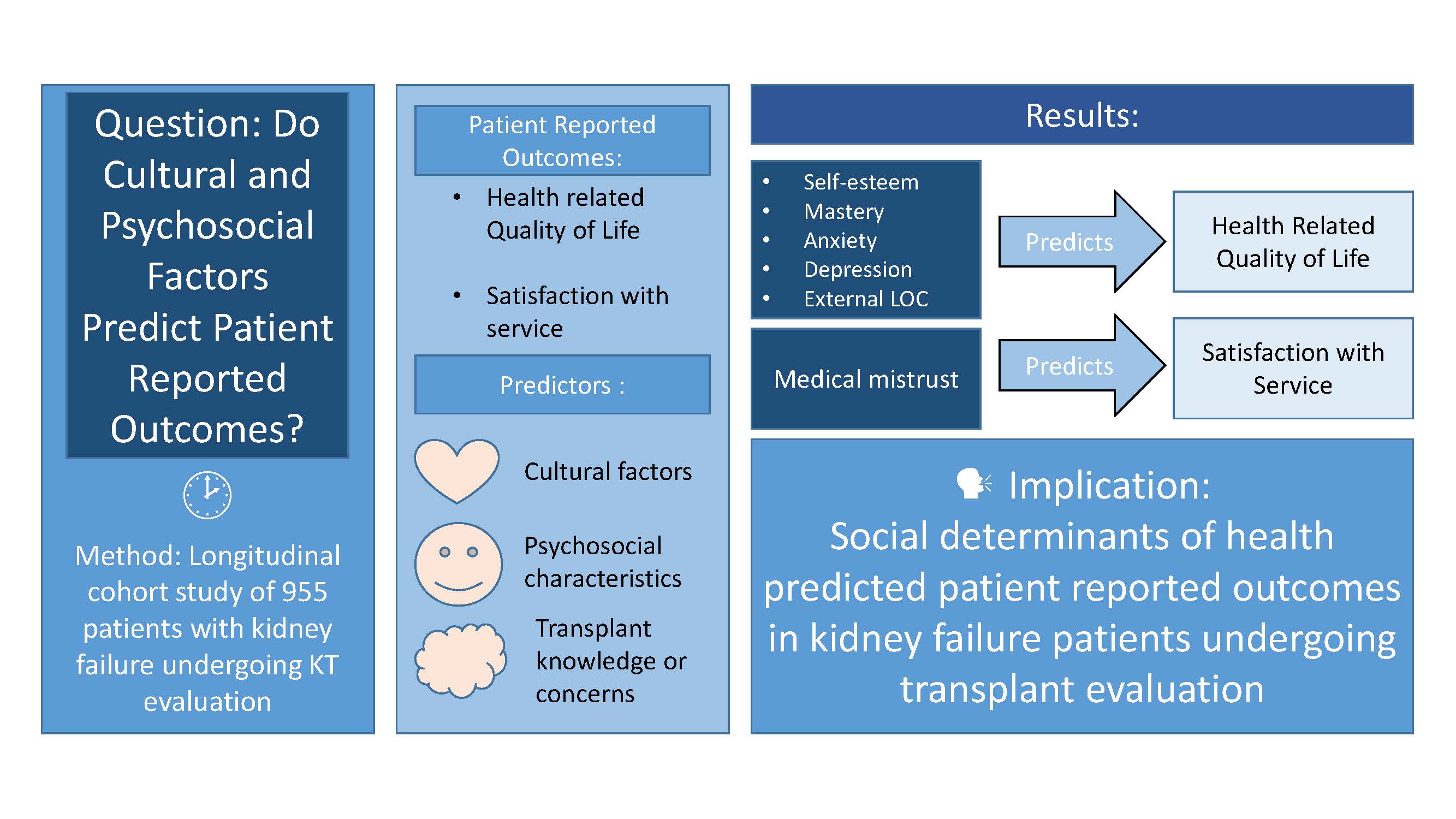
The University of New Mexico’s Center for Healthcare Evaluation in Kidney Disease (CHEK-D) is proud to present our latest publication, "Are Cultural or Psychosocial Factors Associated with Patient-Reported Outcomes at the Conclusion of Kidney Transplant Evaluation?" in Clinical Transplantation. This longitudinal study examined whether cultural factors and psychosocial characteristics, assessed at the start of kidney transplant evaluation, are associated with patient-reported outcomes (including quality of life and satisfaction with service) at the completion of evaluation.
Please access the paper here.
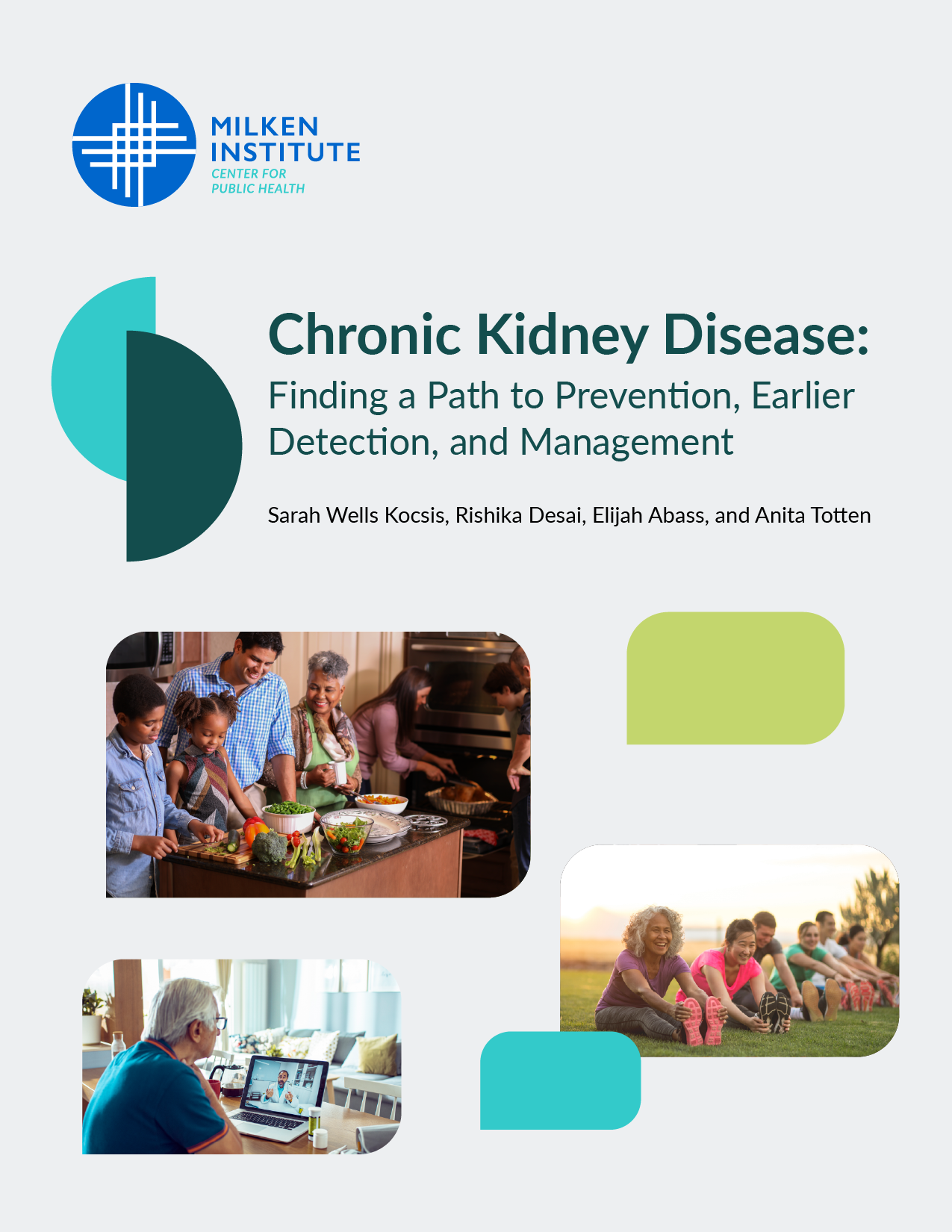
The University of New Mexico’s Center for Healthcare Evaluation in Kidney Disease (CHEK-D) Director, Dr. Larissa Myaskovsky, shared her expertise in the newly released Chronic Kidney Disease: Finding a Path to Prevention, Earlier Detection, and Management report and companion roadmap from the Milken Institute Center for Public Health. Though it ranks as the eighth leading cause of death in the country, as many as 9 out of 10 American adults with chronic kidney disease (CKD) are unaware of their condition. Data indicates this health condition disproportionately affects historically underserved communities, imposing further social and financial burdens on these communities. This report and roadmap call on different stakeholders and identify numerous actionable steps they can take to prevent CKD, deliver earlier detection, and to slow its progression to kidney failure.
The University of New Mexico’s Center for Healthcare Evaluation in Kidney Disease (CHEK-D) is proud to present our latest publication, “Protocol for the IMPACT Trial: Improving Healthcare Outcomes in American Transplant Recipients Using Culturally-Tailored Novel Technology” in the Journal of Renal Nutrition. This trial aims to reduce post-transplant health issues in kidney transplant recipients by providing them with individualized, culturally-tailored diet and exercise plans, developed by a registered dietitian nutritionist and physical therapist, immediately after transplant. This paper describes the procedures of a clinical trial pilot study that will be tested in 20 kidney transplant recipients at the University of New Mexico Hospital. This project was supported by Award Number C-4157 from Dialysis Clinic Inc. (DCI), a national non-profit dialysis provider, and an award from the National Center for Advancing Translational Sciences, National Institutes of Health grant #UL1TR001449.
Please access the paper here or at the JRN website.
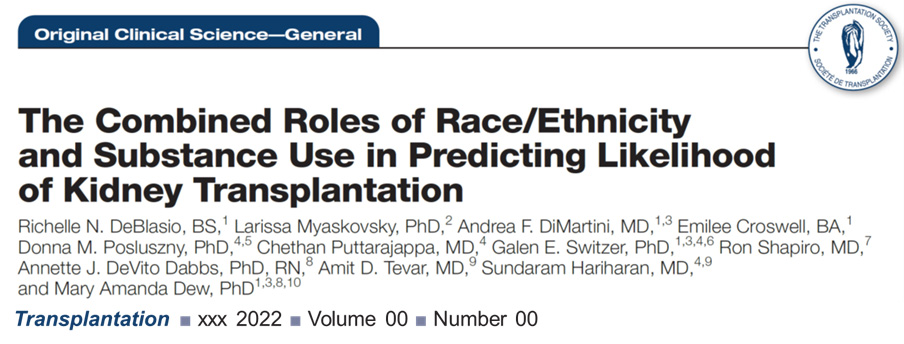
The University of New Mexico’s Center for Healthcare Evaluation in Kidney Disease (CHEK-D) is pleased to announce our latest publication, “The Combined Roles of Race/Ethnicity and Substance Use in Predicting Likelihood of Kidney Transplantation” in Transplantation. We examined whether race/ethnicity in combination with ongoing substance use predicted incidence of kidney transplantation in a sample of 1152 patients, enrolled between March 2010 and October 2012. We found that the combination of minority race/ethnicity and substance use may lead to unique disparities in likelihood of transplantation. This longitudinal study was completed at the University of Pittsburgh Medical Center and was funded by NIDDK grant #R01DK081325 and DCI grant #C-3924.
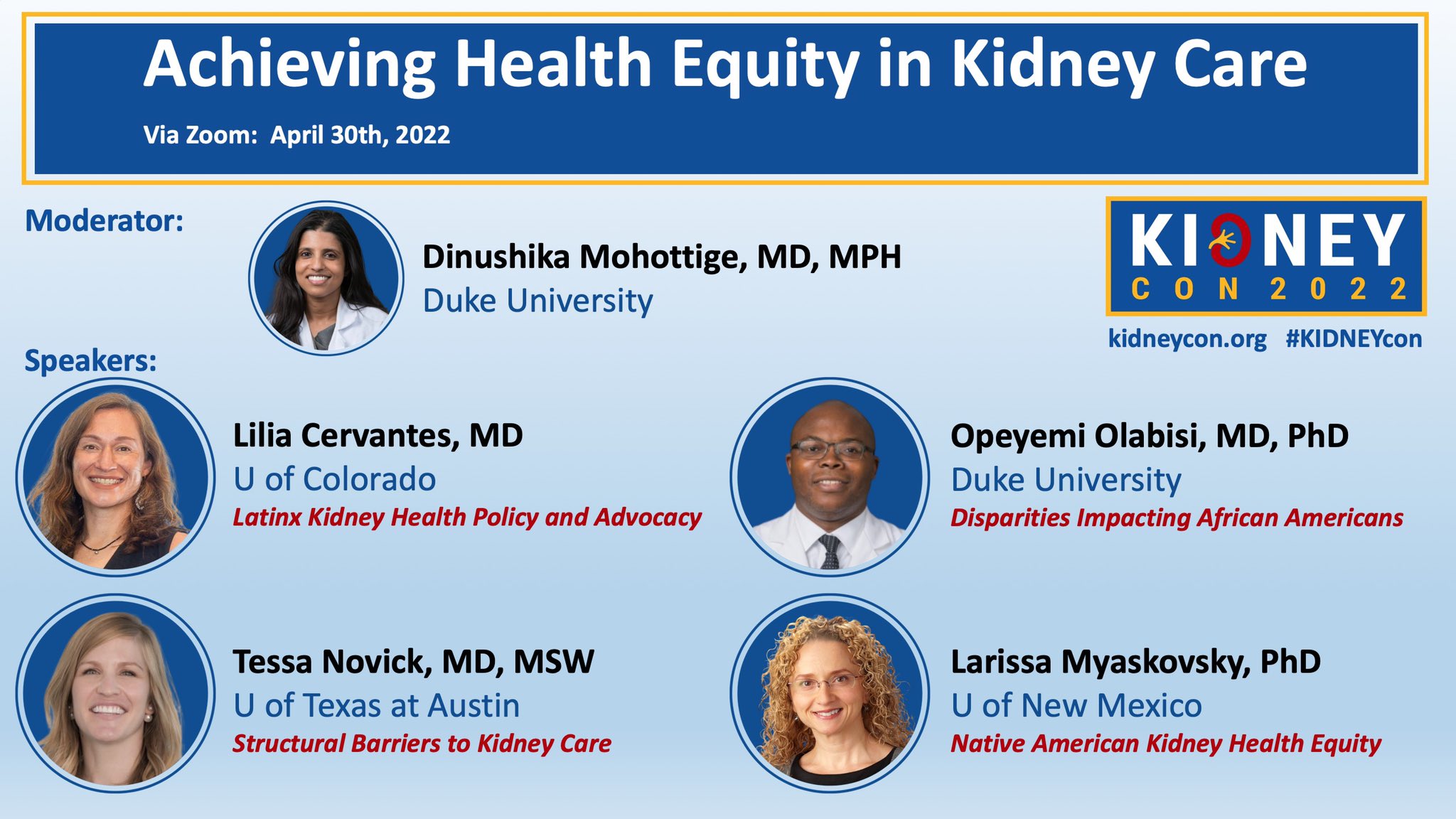
Dr. Myaskovsky spoke at the April 30, 2022 KidneyCon.
Click here for the full description of the conference.

Dr. Myaskovsky recently served as a Guest Speaker at the AcademyHealth Disparities Interest Group 2021 Virtual Networking Event.
Click here for the description.
In a new study published in JAMA Network Open, a team led by CHEK-D mentee, Dr. Margaret Greenwood-Erickson, Assistant Professor in the UNM Department of Emergency Medicine, found that people treated in rural emergency departments had comparable outcomes to those receiving care in urban emergency departments. The team reviewed the administrative claims of two matched groups of 473,152 Medicare patients each who sought emergency care in either urban or rural hospitals between 2011 and 2015.
Please see this link for the UNM HSC write up and this link for the article in JAMA Network Open.
The University of New Mexico’s Center for Healthcare Evaluation in Kidney Disease (CHEK-D) is pleased to announce our latest publication, “Medication, Healthcare Follow-up and Lifestyle Nonadherence: Do They Share the Same Risk Factors?” in Transplantation Direct. We conducted a prospective cohort study to assess the association between kidney patients’ pre-transplant characteristics (including sociodemographic, condition-related, health system, and patient-related cultural and psychosocial factors) with nonadherent behaviors in three different domains post-transplant, including medication adherence, healthcare follow-up, and lifestyle behavior changes. In our analysis of 173 transplant recipients, we found that different nonadherence behaviors may stem from different motivation and risk factors, and concluded that adherence interventions should be individualized to target specific risk factors.
Please see this link for a brief summary and this link for the article in Transplantation Direct.
CHEK-D is committed to significantly and positively impacting research, education and outreach activities to improve healthcare by partnering with dedicated faculty, staff and community leaders.