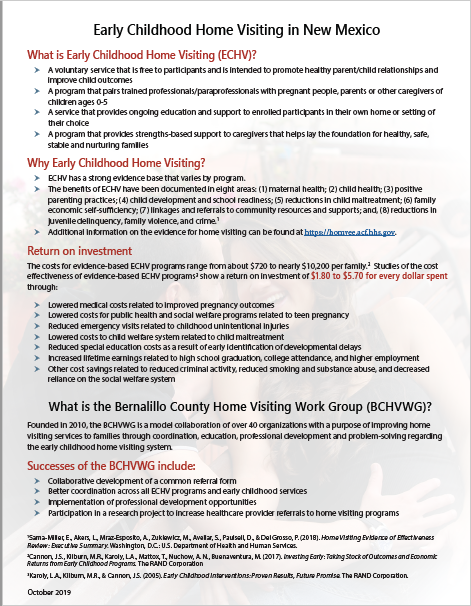

Home visiting is a service that works with pregnant women and young families to ensure that they have the necessary resources and skills to raise healthy children who are ready to learn. Several home visiting programs have an evidence base demonstrating success in areas including child health; maternal health; school readiness and child development; reduction in child maltreatment; positive parenting practices; and facilitating family economic self-sufficiency.
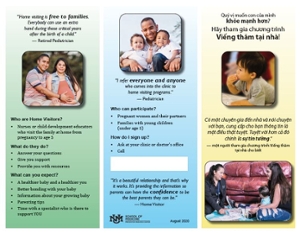
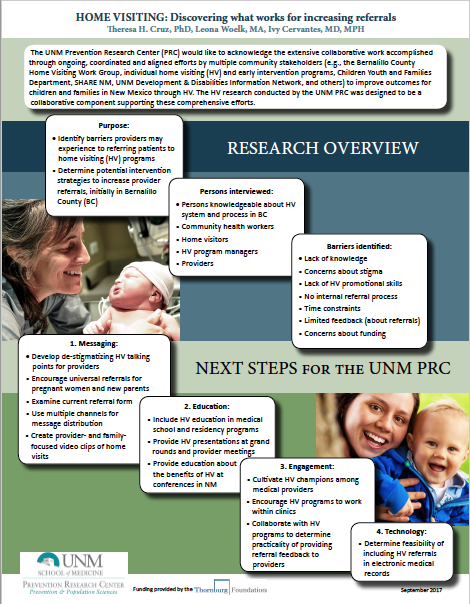
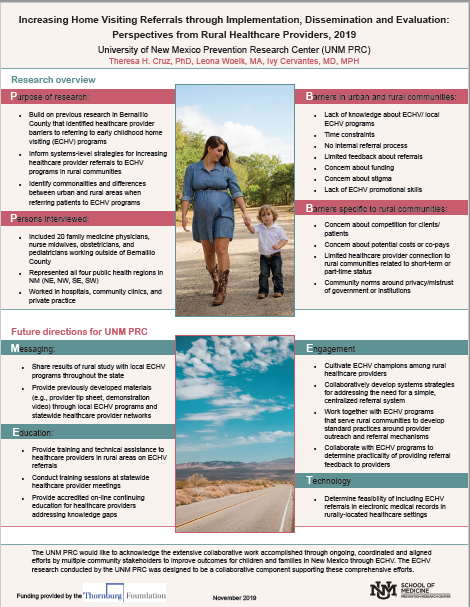
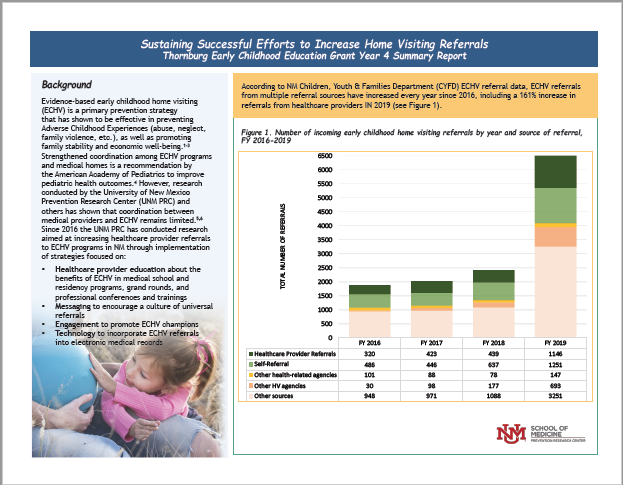
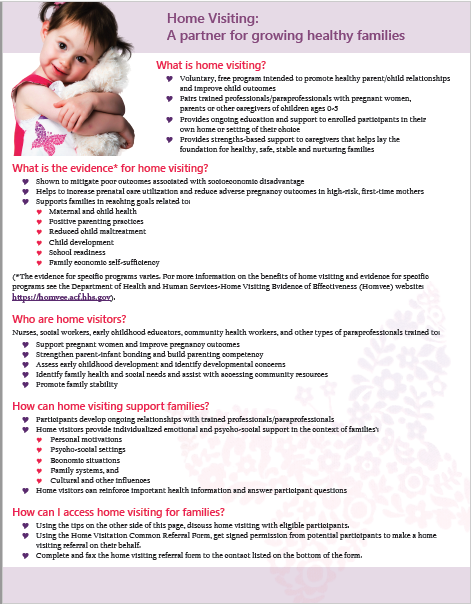
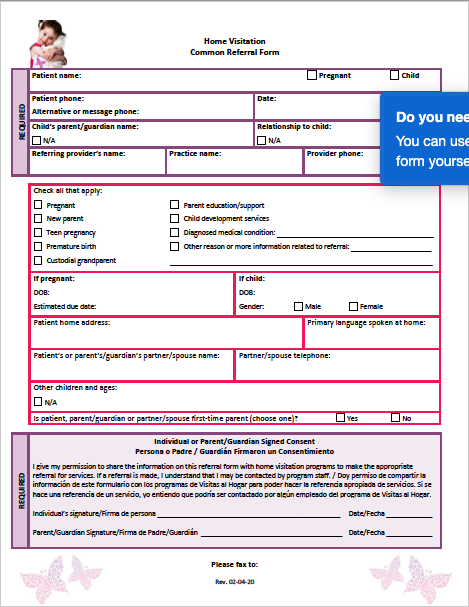
The overarching goal of this research, funded by the Thornburg Foundation, is to increase the number of individuals being referred to home visiting programs by their healthcare providers. This mixed methods study is focused on identifying barriers and facilitators to increasing home visiting referrals and developing and implementing feasible, systems-level strategies. To date, we have produced program materials such as a Tip Sheet for healthcare providers to use when talking to patients about home visiting, patient-facing materials about home visiting in English, Spanish and Vietnamese, a common referral form that providers can use, and a video about early childhood home visiting. We have also developed research reports and briefs summarizing the results of our work.
The overarching aim of Improving Early Childhood Services in New Mexico is to increase recruitment into and retention of families in early childhood home visiting programs in New Mexico. This project addresses four separate but related research questions:
1. To what extent did one-time cash transfers to home visiting participants affect home visiting services (e.g., retention) and family outcomes (e.g., referrals)?
2. To what extent do incentives promote retention in home visiting programs?
3. To what extent do incentives for peer-to-peer referrals increase recruitment and retention in home visiting programs?
4. What type of messaging used to describe home visiting services will increase recruitment into programs?
Utilizing both qualitative (e.g., focus groups, interviews) and quantitative (e.g., administrative data analysis) methods, the four component projects are part of an overarching strategy seeking to identify ways to improve the implementation of home visiting through better recruitment and retention. While each component will contribute, individually, to the home visiting research literature, the combined findings will provide state funders and policymakers with new actionable information.
.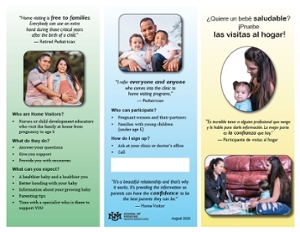 English and Spanish